Showing posts with label quantitative finance. Show all posts

Saturday, December 6, 2014

What is really interesting about Quantitative Behavioral Finance

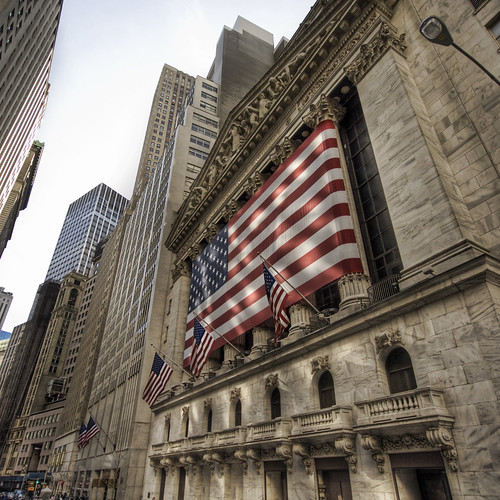
photo by Stuck in Customs via PhotoRee

Quantitative behavioral finance has not been with out for a very long time. As a relatively recent development and area of discourse, it has only begun to gain a following. One very interesting aspect of this field is the use of experimental asset markets. These studies are based on experiments conducted on a small group of people (but with real money hence a real market) to examine where rational expectations and classical game theory fails to explain human behavior. This is basically small-scale version of the prediction markets such as the Iowa Electronic Markets, Intrade, and Betfair. However, unlike prediction markets where the ultimate objective is to predict an external event, experimental asset markets are more interested in the mechanics and patterns of the market itself. Caginalp, Vernon Smith (Nobel Memorial Economics Prize recipient of 2002), and David Porter have a couple of papers on experiments in this mode. Both experiments examine how financial bubbles can happen. Some of the take-aways are that excess cash and information asymmetry due to lack of an open book may exacerbate bubbles. I think the matter of information asymmetry is very salient. Despite all the effort and money invested in improving information infrastructure by banks and hedge funds, ultimately information is distributed non-uniformly to market participants. This is most obvious in the case of the retail investor who neither has the time nor resources to obtain and analyze all the market information.

Thursday, February 28, 2013

Max Drawdown

When it comes down to it, finance is about risk and return. One of the purest measures of risk is max drawdown. This is pretty much the worst-case scenario: one bought at a peak (not necessarily the absolute peak) and a trough (not necessarily the absolute trough) such that the drawdown is maximum, i.e., you have maximum loss. I was curious, if one takes a look at the S&P 500 components from max drawdown only, what does it look like? The time period for this simple study spans 5 years from today, February 28, 2013. Choosing a 5 year period does unfortunately eliminate 25 of the S&P 500 right off the bat due to those symbols not having data running that far back.

S&P component Max drawdown (5 yrs) Std Dev (daily return)
AZO0.1312920.179530
MCD0.1549240.141842
GWW0.1914370.190390
ABC0.1963780.275510
SRCL0.2142330.210143
CERN0.2175810.338044
WEC0.2329360.133349
DTV0.2351170.235420
XEL0.2429850.103072
FDO0.2460840.184564

The above table shows the 10 components with the least max drawdown over the period. An interesting variety of businesses are represented here. It isn't just a list of defensive utilities or consumer staples. We have automotive parts retail, the Golden Arches, industrial equipment, a pharmaceutical, a pharmaceutical waste disposal, healthcare IT, two utilities, and a discount retailer. Note that although these names tend to be low beta, they are hardly low PE. Note that having the least max drawdown doesn't necessarily imply having the smallest standard deviation of daily returns.

S&P component Max drawdown (5 yrs)
BAC0.921133
XL0.925845
GCI0.932099
TXT0.940085
HIG0.950989
FITB0.955382
C0.960199
FSLR0.962171
GNW0.964527
AIG0.992874

This second table shows the 10 components with the greatest max drawdowns. This list is certainly more concentrated than the first table. All except for 3 are financials/insurers/reinsurers. We have the old guard news media represented by Gannett (GCI), aerospace/defense by Textron (TXT), and renewable energy by First Solar (FSLR). If risk averseness is the game, then drawdowns is quite an interesting measure. It shows the worst-case for a single roundtrip trade. Note that trading results may be much, much worse than the max drawdown if a strategy gets repeatedly drawn down in a losing streak. Nevertheless, max drawdown gives some insight into the amount of risk we are taking on. In particular, max drawdown should give some insight into what kind of reserves should be kept. This, of course, isn't foolproof since past drawdowns do not necessarily predict future drawdowns.

Another interesting aspect of max drawdown is that there is really no relationship between max drawdown and daily returns. A regression between the two shows an R2 of a mere 0.0027.

Wednesday, January 25, 2012

Finance Research Papers

Here are a few hot-off-the-press research abstracts which caught my eye:

Thursday, January 19, 2012

Algorithmic Finance

There is a brand new journal combining Computer Science and Finance, Journal of Algorithmic Finance. Both the advisory board and editorial team are ensemble casts with some of the biggest names in computer science and finance. They just published their inaugural issue in December 2011. The top paper (as indicated by number of SSRN downloads) is one on Markets are Efficient if and Only if P = NP, which perhaps is very reassuring to all the traders out there, at least at a theoretical level. For those unfamiliar with the terminology, P means solvable in polynomial time (i.e., we have reasonably smart, efficient algorithms to solve them) and NP means verifiable in polynomial time (i.e., given a solution, we can verify that it works efficiently). NP-complete is a class of problems such that all problems in NP can be (efficiently) reframed in terms of any NP-complete problem. For problems in NP but not in P, we generally do not have efficient algorithms for exact solutions. Instead, we pretty much have to fall back on exhaustive search (i.e., try all the possible answers and see what works). If one can solve an NP-complete problem efficiently in the general case, then one can solve any problem in NP efficiently, which potentially saves some astounding sum of money and enables a lot of previously impractical technologies. The more interesting implication of the paper is that the market can serve as an oracle to solve NP-complete problems. Recently DARPA has decided to invest in crowd-sourcing and gamification to solve difficult formal verification problems. Instead of potentially awkward game embeddings of difficult computational problems, I wonder if market strategies may be more effective and direct.

Monday, November 21, 2011

Top 5 Open Source Quant Finance Projects

In the recent months, I have found the data on open source development projects to be quite fascinating. It turns out that most of the activity in open source quant finance code happens on Sourceforge. I pulled some of that data and charted them.