Showing posts with label economics. Show all posts

Thursday, June 23, 2016

Explaining Market Crashes

The body of academic theories for market crashes explores a number of possible explanations. Why do markets crash? There may be some event that sets everything in motion, but why and when does a decline turn from an ordinary slide to a crash? Didier Sornette wrote a book and did a TED talk on the subject. Scholars as illustrious as Fischer Black and Myron Scholes weighed in on the subject. There are four main theories addressing this phenomenon:

  1. Leverage effects: Drop in prices increases leverage both operating and financial thus exacerbating volatility when businesses and investors have to raise capital to cover leverage or by reducing leverage
  2. Volatility feedback: When bad news arrives, the risk premia magnifies the direct effect of the news
  3. Stochastic bubbles: Crash occurs when a buble pops thus resulting in a low-probability event that produces large negative returns
  4. Investor heterogeneity: Different investors have varying constraints when it comes to short-sales. The more bearish group of investors subject to short-sales constraints may just sell all their sales, a suboptimal solution, and thus their information is not fully included in the market
The oldest theory is focused on leverage effects. The idea is that a drop in prices raises operating and financial leverage thus exacerbating volatility. This theory is articulated by Fischer Black and Myron Scholes in 1973 "The Pricing of Options and Corporate Liabilities" in the Journal of Political Economy. Andrew A. Christie further explores the idea in "The Stochastic Behavior of Common Stock Variances--Value, Leverage and Interest Rate Effects" in the Journal of Financial Economics 1982.

Saturday, September 8, 2012

The Federal Reserve in Pop Culture and Mainstream Politics?

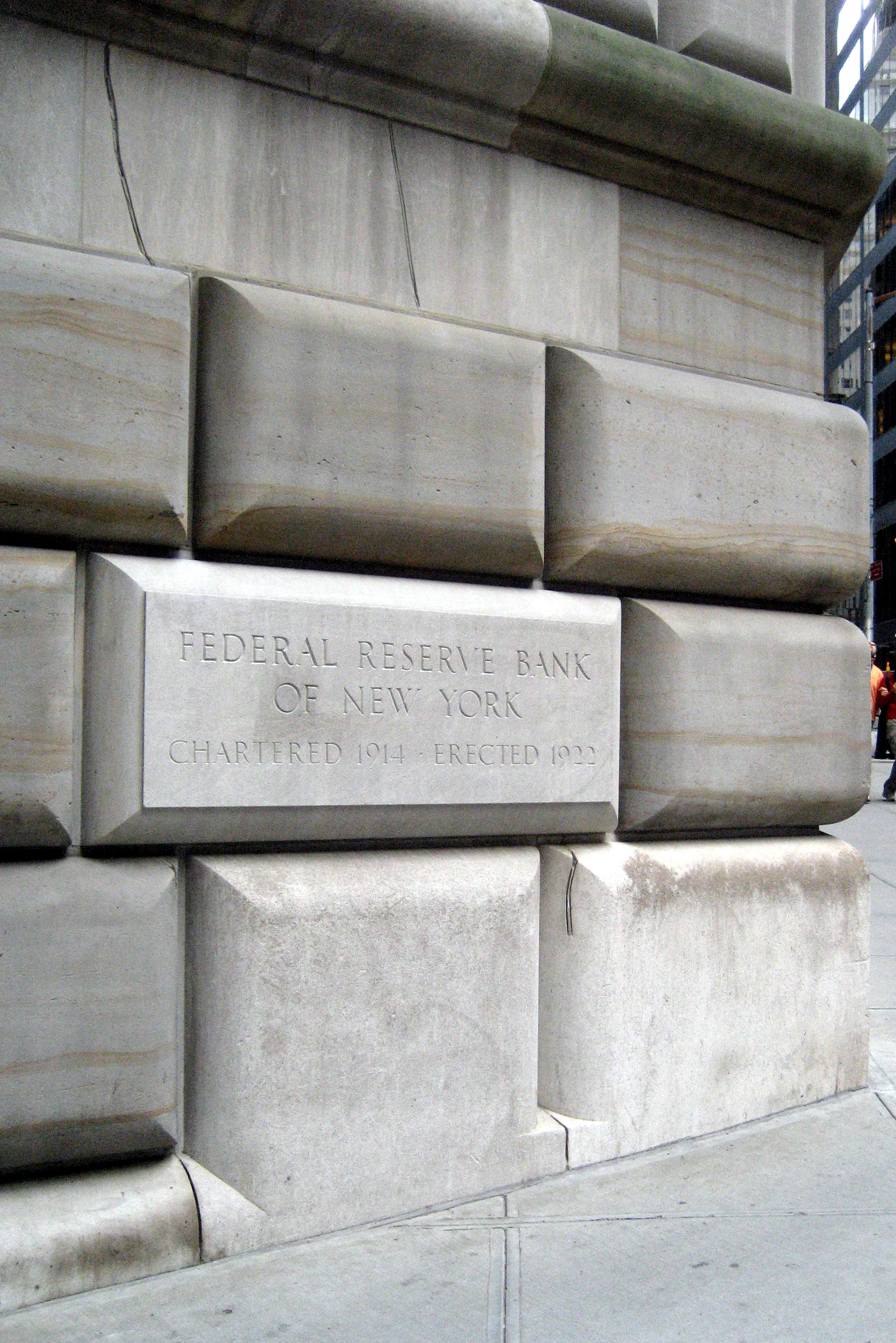
photo by wallyg via PhotoRee

It is really quite interesting how the Federal Reserve ended up so squarely in the limelight in recent years. Sure, US Presidents, candidates, and other politicians have argued for and against national banks since the days of Andrew Jackson and Alexander Hamilton, but monetary policy has not been so close to the mainstream of political discourse in recent years as it is today.

Friday, September 7, 2012

Central Bank Intervention Risk: ECB Outright Monetary Transactions and Federal Reserve Quantitative Easing

It looks like all sorts of risk markets have taken off for the sky with all such markets looking at brand new multi-year highs or at least looking to reach there. Even today's underwhelming Nonfarm payroll jobs number could not dent the continued enthusiasm for central bank action past, present, and future. How long this will last is the question. In regards to the ECB, it is no longer hope but a known quantity, the newly announced and oftentimes leaked Outright Monetary Transactions (OMT) for "unlimited" bond buying on the short end of Euro sovereign debt. The bond buying program is said to be sterilized. Despite that claim, gold prices have shot up dramatically these past few weeks and continue to outperform risk markets. Next on tap is the FOMC decision. Some anticipate QE3 sooner than later, especially since Bernanke has mostly focused on the employment part of the Fed mandate as of late.

Friday, August 31, 2012

Central Bankers at Jackson Hole

Well, the much anticipated Jackson Hole Bernanke speech has come and gone. Everyone from bloggers to the big fund managers have taken drastically different interpretations of the speech. Some argue that the speech was even more bullish than announcing a definite QE3 right then and there. Others interpret this as definitely indicating that there will be no QE3 soon and definitely not before the election. On Twitter, PIMCO's Bill Gross claims

"#Bernanke to go out with his guns blazing. #QE3 a near certainty. It will be open-ended but increasingly impotent."
Most of the I-bank analysts interpret the speech as calling for more easing and on fairly quick order.

Friday, February 3, 2012

Saving Up for College Tuition and Hedging, Part 4

Are prepaid tuition programs a great investment? One is right to be skeptical. The programs vary considerably from state to state. Bankrate.com has an article about some of the programs. It turns out that one can be paying anything from 41% to a slight discount to current tuition. Two states, Pennsylvania and Texas offer programs which do not ask for a premium as long as you use the tuition vouchers for state schools. In the Texas case, you receive fund performance if you elect to go to a non-state school. Virginia's program appears to be offering tomorrow's tuition at a slight discount even compared to today's tuition rates if one goes to the most expensive state school. Otherwise, you would be paying a premium. For most of the state programs, tuition inflation will have to accelerate considerably for the programs to be worthwhile. Still, though purchasers of prepaid tuition vouchers pay a premium, the states are still on the hook if tuition inflation does get out of hand.

Thursday, February 2, 2012

Saving Up for College Tuition and Hedging, Part 3

Ever since the government permitted it, many private colleges have been hopping onto the tuition prepayment plan bandwagon. Unlike the College Board's IC 500 index, tuition prepayment often does not include room and board increases. Colleges including some of the Ivies (e.g., Dartmouth, Penn, Princeton), MIT, Stanford, UChicago, and USC tout the private college prepaid plan. For a complete list of the 270+ private schools using this plan, see the consortium's website (managed by OppenheimerFunds, which also happens to manage many of the state 529 plans). States sponsor their own, but some are portable and can be used to fund tuition at out-of-state private schools or even select foreign ones.

Wednesday, February 1, 2012

Saving Up for College Tuition and Hedging, Part 2

To answer the question of college tuition hedging, we need to determine the amount of tuition increases and the variability in that change. Generally, higher education revenues come from federal and state aid, alumni giving, endowment returns, and tuition. For research universities, a big chunk comes from research grants. Thus, changes in funding levels for each of these components must be compensated by the others. How have these factors evolved in the past few decades? Can we explain tuition inflation in terms of these other factors?

This is second in my on-going series of posts on college tuition and investment. See the first post.

Monday, January 23, 2012

Saving Up for College Tuition and Hedging, Part 1

One of the biggest expenses for many American families is college tuition. In fact, it is a component of the Consumer Price Index (CPI), though not a very big component. The other overwhelming expenses are transportation (typically cars) and housing. For transportation and housing costs, you can at least partially hedge against further price increases (however imperfectly) by investing in appropriate securities (crude or RBOB futures and Case-Schiller housing futures). According to the December 2011 CPI report, tuition has increased by almost 7-fold since 1984 (the baseline of the CPI). For comparison, tuition increases have dwarfed even growth in hospital services expenses (only 6.5x). The only component of the CPI that grew more was tobacco (8.4x). Thus, not only is tuition a big expense, it is also one of the fastest growing. According to the Bureau of Labor Statistics (BLS)'s analysis, the college tuition inflation rate averages about 6.7% annually for the past 10 years (with a low of 4% and a high of 9.8%), even amidst recession. Recession exacerbated the increases as governments cut funding. Now what kind of investment can give an 8% annual return even in the midst of a massive downturn? A tax-sheltered education savings account such as a Coverdell or 529 Plan helps, but even then a steady 8% pre-tax return from index or mutual fund investing is quite challenging. MyMoneyBlog puts everything in perspective, showing that tuition increases dwarf that of the housing bubble.

In this series of posts, I will be looking into the cause of tuition inflation and the different possibilities for dealing with the phenomenon in investment terms.

Monday, January 16, 2012

Airport Reading

When I am stuck in the airport I often visit the bookstores there. Airports are apparently one of the last bastions where bookstores still exist whereas they have completely disappeared in some towns. Most of the time, airport bookstores do not carry anything of interest to me except the latest Barron's and a few finance magazines. Consequently, I was surprised pleasantly to see at least two of Michael Lewis' books at one airport bookstore, Boomerang: Travels in the New Third World (about the roots of financial crises in Greece, Ireland, Germany, and the US) and Moneyball (about the business and economics of baseball), both being NY Times bestsellers. Lewis the the author of Liar's Poker, a sardonic expose on the unreal bigger-than-life world of Wall Street in the 1980s.

Thursday, December 22, 2011

Shareholder Meetings

Matthew Rafat's blog willworkforjustice.blogspot.com has a first-hand record of shareholder meetings for a number of companies, though mostly in the Bay Area since that is where he is based. With organizations such as moxyvote starting up and various motions towards more responsive corporate governance, this record is an interesting data point. Large shareholders (pension funds, etc.) are still for the most part slumbering giants.

Tuesday, December 20, 2011

US Debt Service

The economic times have really changed. The scope of household deleveraging is quite astounding. The Federal Reserve releases a figure called the Financial Service Ratio which measures amount of consumer and mortgage debt servicing including automobile lease payments, rental payments on tenant-occupied property, homeowners' insurance, and property tax payments to disposable personal income. For renters, the ratio peaked around 2001 at 31.05. For homeowners, it peak a lot later around 2007 at 17.55. Both have been sliding ever since. This data refers to the country as a whole. The picture for the individual regions may look different.