Showing posts with label finance. Show all posts

Tuesday, July 23, 2013

Munis

Over the past few months, munis have a hit hard, very hard. Even after the mild recovery since the end of June, index funds such as MUB (duration 7.17 yrs, distribution yield 2.97%) are down in excess of 7% YTD. High-yield munis, HYMB (duration 12.02 yrs, distribution yield 5.89%), are taking it even worse with a YTD drawdown of almost 12%. In a perfect storm of rising yields, illiquidity, high redemptions, and a default from Detroit to boot, munis are facing considerable challenges. HYMB, especially, is exhibiting considerable discount to NAV at the 3-5% level. Unfortunately, as others have noted, for highly illiquid assets such as muni bonds, the market price might actually be more accurate than the NAV. That said, even with the Detroit bankruptcy, which has been thrown back into court, the credit impact on HYMB should be muted as Detroit only comprises 1.33% of NAV and even all of Michigan only 3.53%. There is, however, the risk of other municipalities defaulting, but that risk has been there for a while. Note that muni bonds typically have high recovery rates (as high as 68%). The remaining headwinds of rising rates and redemptions will likely be challenging enough for the muni market. As the economy recovers and state coffers get replenished, the credit spread ought to tighten, but whether enough to counter the effect of rising rates is another question.

Wednesday, November 7, 2012

Financials of a University System

University Bonds

Universities are interesting creatures financially speaking. They are relevant because they often float general obligation and revenue bonds to finance themselves. These bonds are typically tax exempt and are part of the greater municipal bond universe. As an asset, they are infrequently traded. As a business, they derive a considerable amount of revenues from their medical center operations, government research contracting, government appropriations, and finally tuition. Consider the University of California system, the largest of its kind 302k students and 136k faculty spread across 10 campuses.

University Revenues

The lion's share of the revenues come from the medical centers and government research grants/contracts. Actual state appropriation funding and tuitions contribute only a quarter of the total revenue.

Over the past 5 years, the tuition/fees category grew by about 61%. Medical center and government contracts revenue grew by 38% and 26% respectively. State appropriations and DOE lab contributions actually declined by 6% and 55% respectively.

University Expenditures

The chief risk in to the business is the defined-benefit pension program (amounting to a $2B/year payout). The number of retirees receiving payments may have only increased by 13% over the past 5 years, but the amount of payments has increased by 25.6% over the same period. Two years (2008 and 2009) of massive depreciation of the assets in the plan certainly did not help. Over the same period, the income part of the plan investments (interest and dividends) declined by 41% at least partially due to the low-interest rate environment of recent years.

The California state government budget crisis led to some deferred payments to the university system in 2010-2012, amounting to around $500MM each year.

Tuesday, November 6, 2012

Election Day Yields

What does the fixed income market look like after a horrible superstorm and on the an election day which may or may not be decided quickly? Since the announcement of QE Unlimited, mortgage-backed securities prices have come down quite a bit as has their commercial MBS cousin. In fact, MBSes have been pulling back pretty much all day. Emerging market debt has pulled pulled back. The following table shows the 1 week max drawdown, max drawdown as a % of principal, and standard deviation of prices for several fixed income ETFs. I bond (savings bond) rates have been reset to a mere 1.76% due to persistently low CPI numbers.

SymMDD(%MDD)STDYield
AGG0.390.35%0.153.54
SHY0.030.04%0.011.13
LQD0.780.63%0.314.81
CSJ0.170.16%0.062.79
CIU0.340.30%0.124.20
JNK0.130.32%0.0510.16
HYG0.330.36%0.138.68
MUB0.280.25%0.113.53
MBB0.180.17%0.073.58
CMBS0.090.17%0.07
TIP0.50.41%0.192.48
EMB0.750.62%0.274.93
ELD0.160.30%0.06

Thursday, September 27, 2012

QE3 Fixed Income Aftermath

So what happens to fixed income after QE3? I thought it would be interesting to look at the max drawdowns versus the current 30-day SEC yields for a select cross-section of the fixed income ETF space for the past 52-weeks. All yields are quite compressed as is expected. Yields are so compressed that only MBB (US agency-based mortgage bonds) has a 30-day SEC yield exceeding the max drawdown. TIPs have negative yield as was true for quite a while now. It seems the contagion of return-free risk has spread to most of the fixed income ETF universe at this point.

Wednesday, September 26, 2012

Seeking Yield

Prolonged ZIRP has risk-averse conservative investors to a lot unlikely places. Mike Ashton, the Inflation Trader, who seldom recommends specific investments, has given a low-down on series I savings bond as a last bastion of "risk-free" inflation matching yield. Since TIPs are negative and nominal Treasuries have horrendously negative real yields, there aren't a lot of safe havens that make sense anymore. Investors have piled on corporates, emerging market debt, preferred shares, and even dividend-growers to bump up the scant yields they are seeing everywhere. Today, dividend-payers and growers (Schwab's dividend ETF (based on DJ US Dividend 100 Index) has a 30-day SEC yield of 2.99%) are looking like a relatively good deal when compared to Treasuries. But is all this risk worth it and what about the opportunity cost of sitting on short-term instruments? I bonds are interesting in that they have relatively high current yield (2.2%, the same as CPI-U) and are exempt for state income taxes (2.48% taxable equivalent yield for high income tax states). In fact, when the proceeds are used for educational purposes, it is also exempt for federal income taxes (meaning 3.8% taxable equivalent at maximum income tax rates). The term structure of these instruments are standardized: 30-years but redeemable penalty-free from 5-years. These instruments are not transferrable so there is no secondary market. The downside is that the excess fixed rate of return (set by Treasury) is guaranteed to be zero (which is better than TIPs right now) and each person can buy at most $10k worth of these.

Saturday, September 8, 2012

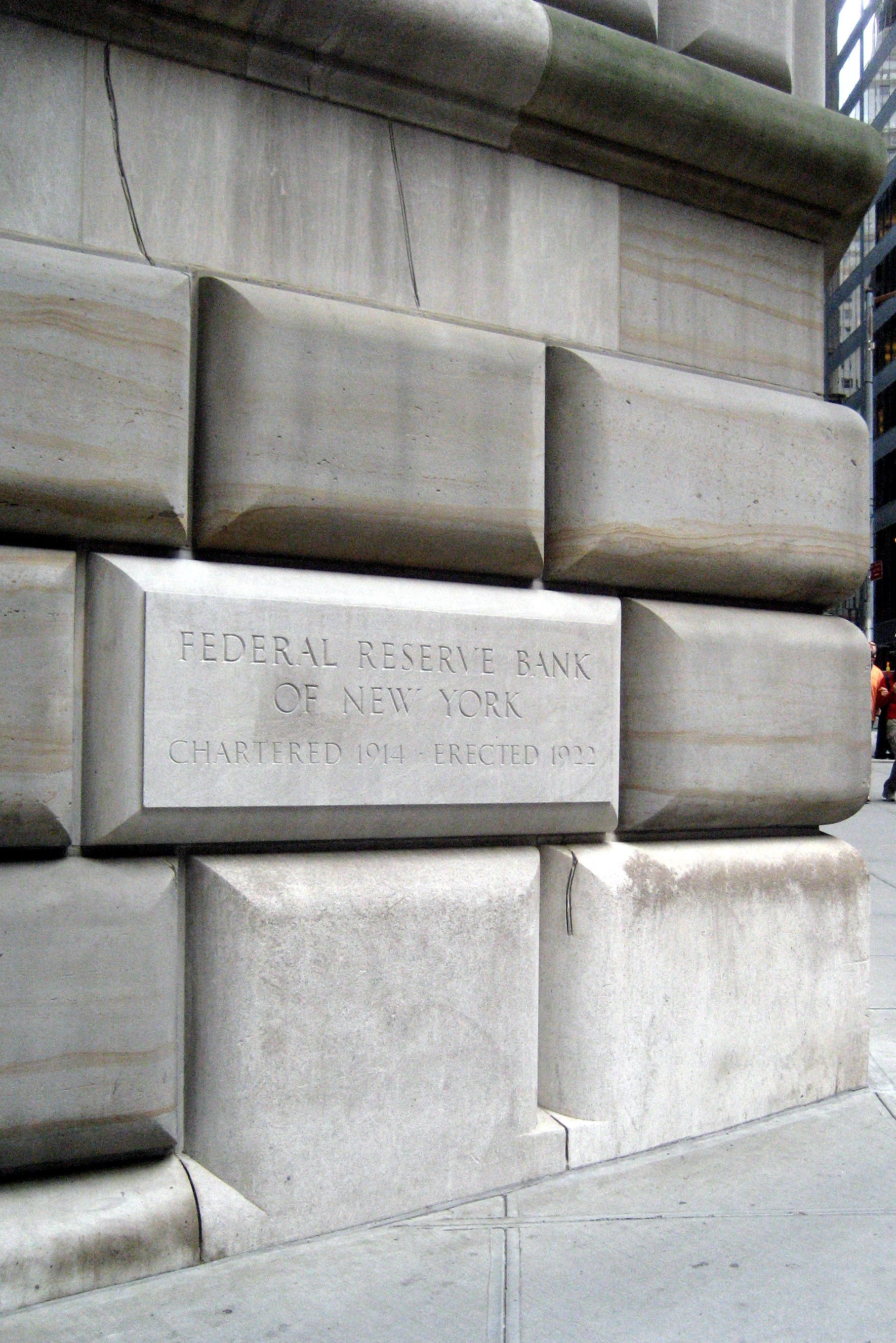
The Federal Reserve in Pop Culture and Mainstream Politics?

photo by wallyg via PhotoRee

It is really quite interesting how the Federal Reserve ended up so squarely in the limelight in recent years. Sure, US Presidents, candidates, and other politicians have argued for and against national banks since the days of Andrew Jackson and Alexander Hamilton, but monetary policy has not been so close to the mainstream of political discourse in recent years as it is today.

Friday, September 7, 2012

Central Bank Intervention Risk: ECB Outright Monetary Transactions and Federal Reserve Quantitative Easing

It looks like all sorts of risk markets have taken off for the sky with all such markets looking at brand new multi-year highs or at least looking to reach there. Even today's underwhelming Nonfarm payroll jobs number could not dent the continued enthusiasm for central bank action past, present, and future. How long this will last is the question. In regards to the ECB, it is no longer hope but a known quantity, the newly announced and oftentimes leaked Outright Monetary Transactions (OMT) for "unlimited" bond buying on the short end of Euro sovereign debt. The bond buying program is said to be sterilized. Despite that claim, gold prices have shot up dramatically these past few weeks and continue to outperform risk markets. Next on tap is the FOMC decision. Some anticipate QE3 sooner than later, especially since Bernanke has mostly focused on the employment part of the Fed mandate as of late.

Wednesday, July 18, 2012

How Top Hedge Fund Managers Started Out: What environments and opportunities gave rise to these financial business titans

The rarefied world of hedge funds normally does not like to stay public limelight too long. When they end up in the limelight, it is usually more trouble than it is worth. So how did these titans of finance get started? In particular, how many years of experience did they have and how much initial capital did they start out with?

David Einhorn of Greenlight Capital started in 1996 with $900K ($500K from his parents) after 2 years at SC Fundamental Value Fund. Cite. He graduated from Cornell in 1991 (Wikipedia).

Ray Dalio graduated from Long Island University and Harvard (1973) source, and founded Bridgewater Associates in 1975 after a few years working as a futures and equities trader. In the beginning, Bridgewater was for the most part an advisory outfit. It wasn't until 1987 that it started managing $5MM from the World Bank. Source

Glenn Dubin and Henry Swieca founded Highbridge Capital Management in 1992 with $35MM. Dubin graduated from Stony Brook University in 1978 with a degree in Economics, upon which he started as a retail stock broker at E.F. Hutton in the same year. Swieca graduated from Stony Brook University and Columbia. He started at Merrill Lynch and moved to E.F. Hutton eventually.

Daniel Och founded Och-Ziff Capital Management in 1994 with $100MM from the Ziff publishing family. He is a graduate of UPenn and an 11-year alumnus of Goldman.

Seth Klarman founded Baupost Group in 1982. He is a graduate of Cornell and Harvard.

David Tepper founded Appaloosa Management in 1993 with $57MM in initial capital after spending 8 years at Goldman and earning degrees from Univ. of Pittsburgh and CMU.

Steven Cohen founded SAC Capital in 1992 with $20MM of his own money. He started as an options arbitrage trader at Gruntal & Co. in 1978, giving him 14 years of experience before starting his own fund. He is a graduate of UPenn.

Monday, July 9, 2012

Fixed Income Update

While equities have certainly entered summer doldrums, bonds have recently mounted an impressive rally. It's no surprise at this point that high-grade corporates are very popular for fixed income allocations since they are one of the few remaining bastions where one can obtain an inflation-beating yield. Since the May 22 near term trough, high-grade corporates (as represented by LQD), high-yield corporates (JNK), and intermediate term Treasuries (IEF) have rallied 3.49%, 3.76%, and 2.03% respectively. I am choosing to compare LQD to IEF because they have similar durations, 7.69 and 7.55 respectively. Though Treasuries have yet to reclaim their highs for the year (achieved on Jun. 1), high-grade corporates are looking at a multi-year high (the highest at least as far back as 2002). The correlation coefficient between LQD and IEF during the span between May 22 to July 9 stands at 0.737. Historically, for the nearly 10-year period from July 31, 2002 to July 6, 2012, the correlation coefficient between LQD and IEF stood at 0.952. The whole Treasury complex is quite richly valued at this point. Have we reached the point where high-grade complex are even more richly valued?

Tuesday, June 26, 2012

Divergence

Recently, I was looking around for a nice quick and light nonfiction reading. NPR is usually a great source for hearing about new nonfiction. There are many NPR programs where the host invites an author to peddle his or her wares. Alas, this time I was looking for a more concentrated list of potential light reading (where my definition of light reading may differ from yours). Furiously flipping through the NY Times bestseller list yielded a couple of candidates, but quite matched my craving for something similar to Alan Abelson's weekly Up and Down Wall Street column in Barron's, always dangerously witty yet informative. It was then that I stumbled on Timothy Noah's The Great Divergence: America's Growing Inequality Crisis and What We Can Do about It. The Great Divergence is a terrific read for our times. It is actually quite well grounded, citing numerous research papers from economists such as Paul Krugman, Emmanuel Saez, and many others. The book itself is an expansion of Noah's 10-part Slate column on "The United States of Inequality" from 2010. Noah looks at all the usual suspects (demographics, immigration, automation/computers, government policy, globalization, and education) and grills each against the long history of research findings and data.

Monday, April 9, 2012

High Frequency

Wissner-Gross and Freer has a 2010 paper in Physical Review on Relativistic Statistical Arbitrage [official version, pdf]. It makes the observation that as the propagation of prices and trades reach relativistic velocities, that very relativistic limitation of propagation induces some intermediate locations (midpoints between each pair of the 52 world exchanges weighted by turnover velocity) between exchanges from which profitable arbitrage can slow or even stop information propagation. The subject of the study is a Vasicek model of cointegrating instruments based an Ornstein-Uhlenbeck process and an Ehrenfest urn model of diffusion. One hypothesized strategy has to do with offsetting positions in geographically separated exchanges. Because proving one has the correct offsetting position in a distant exchange takes too much time, a low-latency system placed in the intermediate point between two exchanges can certify offsetting positions for both exchanges.

This does remind me of another article on the proposed London-Tokyo fiber link to run under the Arctic circle. The fiber infrastructure isn't always laid according to great circle distance. Many pairs of exchanges probably are not directly connected with each other at all. Moreover, turnover varies, perhaps this means one would need a mobile or at least a chain of load-balanced low-latency systems spanning the distance between each pair of exchanges to adapt to changing conditions. Perhaps there will have to be some dynamic hedging strategies too. Regardless, the paper is an interesting look into unintended consequences of the race to zero.

Tuesday, March 13, 2012

Preferred Stocks

Preferred stocks have risen considerably from their lows last year. In fact, PFF (US Preferreds) outperformed the S&P 500 by 130 basis points excluding dividends. Given that the lion's share of the preferreds universe is financial, this isn't too surprising. The flip side of this rise is that preferreds are getting close even not having already exceeded their call price. Of the top 5 holdings in the PFF portfolio, I could find call information for only three of them. The top holding, GM series B preferreds trades at 42.23 but has no call feature. It is, however, convertible. The 2nd top holding HCS series B (HSBC Bank) trades at 27.33 and also has no call feature. It is not convertible. The 4th largest holding is WFC series J (Wells Fargo) which is callable at 25 but currently trades at 29.63. That amounts to a potential 15.6% loss right off the bat from a call. WFC.PFJ yields 6.78%, so you are no where near compensated for the call risk. That said, I was surprised that 2 out of the top 5 holdings did not have the call feature, so PFF, though still quite risky, may be more resilient than meets the eye. In the very least, we cannot say that its entire portfolio is callable at a moment's notice.

Monday, March 12, 2012

Asset Classes

Given the past few eventful weeks, I thought it would be interesting to review the state of the various asset classes. Below is a table with the 3-months returns for some ETF proxies for various asset classes.

Security3 mos return
GLD0%
OIL7.4
JJC7.7
GSC9.1
LQD4.4
JNK3.7
EMB4.4
LAG-0.2
DIA6.1
SPY9.1
VWO12
MDY10.7
PFF10.4

Notably, gold and bonds (LAG) are underperforming the other classes after tremendous outperformance last year (2011). With the good job numbers coming out in the past couple of months, the prospective for real growth is looking a little better, thus denting the appeal of gold despite the massive central bank easing through the world. Bonds, which have been looking a negative real yields for a while now, are still holding up pretty well all things considered. Of course, Operation Twist is probably still helping quite the bit.

Friday, March 2, 2012

Permanent Portfolio

Amidst the past few years of turmoil, Harry Browne's Permanent Portfolio is an interesting case. Browne is an investment manager, author, and two-time Libertarian Presidential candidates (for some reason a whole lot of investment managers are Libertarian). The Permanent Portfolio is composed of four equally weighted components: stocks, bonds (long-dated Treasuries), cash (short-term Treasuries), and gold (bullion). The Permanent Portfolio is currently available to the public in two forms: Michael J. Cuggino's Permanent Portfolio mutual fund (PRPFX) and Global X's Permanent ETF (PERM). Of course, one can certainly build one's own permanent portfolio using individual securities and ETFs. As least from PRPFX's perspective, the lost decade was hardly a lost decade. It returned a respectable 164% for the period 2002-2011. That isn't to say that there wasn't some volatility along the way. During the depths of the crisis from June 2008 to February 2009, the portfolio experienced the maximum drawdown of 19.6% (though max quarterly loss was only 6.86%). Cuggino's execution emphasized Swiss sovereigns (in Swiss francs so there is some currency exposure) alongside US Treasuries. For the growth component, he overweights energy, miners, and REITs.

Tuesday, February 28, 2012

Market Manipulation, Part 1

If the investment advice and forums are any indication, a lot of people consider the markets rigged and manipulated. But what is a good working definition of manipulation? There is price manipulation. That entails the defining what an "artificial" price is. Price manipulation is probably one of those things with a long, long history. One of the most famous cases is that of the Hunt brothers' attempted cornering of the silver market in the late 1970s and early 1980s. Market bubbles may also contribute to "artificial" prices, but bubbles are more of a natural psychological reaction of market participants, not some insidious conspiracy. This difficulty works both ways. Government and industry regulatory organizations cannot be too specific about what signals of fraudulent market activity they are scanning for lest the perpetrators simply work around those signals to escape detection. Besides straight price manipulation, regulatory agencies also consider order flow and spread manipulation.

Johan and Cumming did a study on Market Surveillance regimes around the world in a 2008 paper Global Market Surveillance.

Rosa Abrantes-Metz has written a number of papers on the subject including a 2007 paper Is the Market Being Fooled? An Error-Based Screen for Manipulation.

Wednesday, February 8, 2012

Indicators and Timeframes

MarketSci has a short post on what they consider long, intermediate, and short term indicators and strategies. Most indicators can vary sampling periods in order to smooth them out to avoid false alarms. As indicated by MarketSci, the relevancy of different indicators does depend on the amount of data as well as the timeframe. However, with the advent of practical high-frequency data, it is no longer the case that smaller time frames necessarily implies sparser data. One could certainly be sampling weekly for a multi-year indicator and end up with less data than sampling ticks for a few minutes in high-frequency data. The guidelines seem to be that long-term is ruled by trend-following (e.g., moving averages), intermediate-term by mean reversion, and short-term by "noise" (their example is RSI).

Wednesday, January 25, 2012

Finance Research Papers

Here are a few hot-off-the-press research abstracts which caught my eye:

Thursday, January 19, 2012

Algorithmic Finance

There is a brand new journal combining Computer Science and Finance, Journal of Algorithmic Finance. Both the advisory board and editorial team are ensemble casts with some of the biggest names in computer science and finance. They just published their inaugural issue in December 2011. The top paper (as indicated by number of SSRN downloads) is one on Markets are Efficient if and Only if P = NP, which perhaps is very reassuring to all the traders out there, at least at a theoretical level. For those unfamiliar with the terminology, P means solvable in polynomial time (i.e., we have reasonably smart, efficient algorithms to solve them) and NP means verifiable in polynomial time (i.e., given a solution, we can verify that it works efficiently). NP-complete is a class of problems such that all problems in NP can be (efficiently) reframed in terms of any NP-complete problem. For problems in NP but not in P, we generally do not have efficient algorithms for exact solutions. Instead, we pretty much have to fall back on exhaustive search (i.e., try all the possible answers and see what works). If one can solve an NP-complete problem efficiently in the general case, then one can solve any problem in NP efficiently, which potentially saves some astounding sum of money and enables a lot of previously impractical technologies. The more interesting implication of the paper is that the market can serve as an oracle to solve NP-complete problems. Recently DARPA has decided to invest in crowd-sourcing and gamification to solve difficult formal verification problems. Instead of potentially awkward game embeddings of difficult computational problems, I wonder if market strategies may be more effective and direct.

Monday, January 16, 2012

Airport Reading

When I am stuck in the airport I often visit the bookstores there. Airports are apparently one of the last bastions where bookstores still exist whereas they have completely disappeared in some towns. Most of the time, airport bookstores do not carry anything of interest to me except the latest Barron's and a few finance magazines. Consequently, I was surprised pleasantly to see at least two of Michael Lewis' books at one airport bookstore, Boomerang: Travels in the New Third World (about the roots of financial crises in Greece, Ireland, Germany, and the US) and Moneyball (about the business and economics of baseball), both being NY Times bestsellers. Lewis the the author of Liar's Poker, a sardonic expose on the unreal bigger-than-life world of Wall Street in the 1980s.